中国特色社会主义研究 ›› 2025, Issue (6): 29-40.

• 中国式现代化理论与实践 • 上一篇    下一篇

中国式现代化指标体系的研究进展与展望

邢晓旭, 李晓华   

  • 收稿日期:2025-11-18 出版日期:2025-12-28 发布日期:2026-01-28
  • 作者简介:邢晓旭,中国社会科学院中国式现代化研究院助理研究员|李晓华,中国社会科学院研究员、中国社会科学院大学应用经济学院教授
  • 基金资助:
    中国社会科学院重大创新项目“发展新质生产力体制机制研究”(2024YZDJ005)

Research Progress and Prospects of the Indicator System for Chinese Modernization

Xing Xiaoxu, Li Xiaohua   

  • Received:2025-11-18 Online:2025-12-28 Published:2026-01-28

摘要:

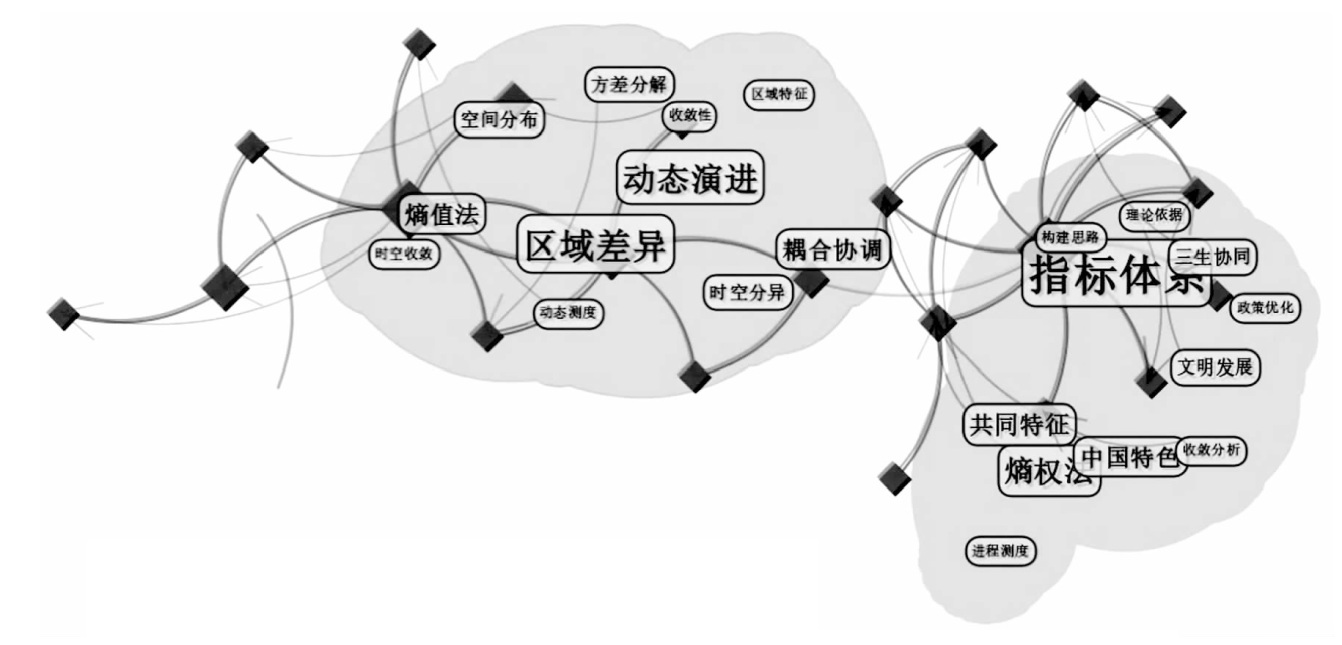
构建科学、系统、可操作的中国式现代化指标体系,是推进高质量发展和精准落实中国式现代化中长期战略目标的关键支撑。首先,基于对国内外现代化指标体系研究的系统梳理,归纳了世界现代化指标体系从单一维度向经济、社会、生态等多维协同转型的研究脉络,揭示了中国式现代化指标体系研究的热点与演进趋势。其次,基于CNKI关键词聚类知识图谱,对中国式现代化指标体系研究热点与演进路径进行综合评述。研究发现,国内学者主要从“五位一体”总体布局、五大特征、新发展理念、三生空间协调及区域治理五种视角提出评价维度,并在经济、社会、政治、文化、生态五大领域下高频选取具有代表性的二级指标。此外,进一步探讨了2035、2050两阶段远景目标在指标目标值设定中的衔接逻辑与测算方法,以及“主观—客观—融合”三类综合评价技术路径的适用边界。最后,从顶层设计、进程规划与指标维度三个层面提出聚焦多维理论内核、统一阶段化目标标准、兼顾中国特色与国际共识的未来研究展望,以期为中国式现代化指标体系的持续迭代和实际应用提供参考。

关键词: 中国式现代化, 指标体系, 评价维度, 研究综述

Abstract:

Constructing a scientific, systematic, and practical indicator system for Chinese Modernization is essential for advancing high-quality development and effectively implementing China's medium- and long-term strategic goals. First, based on a comprehensive literature review of modernization indicator systems both domestically and internationally, this paper summarizes the evolutionary trajectory from a singular perspective to a multidimensional framework involving economic, social, and ecological dimensions, highlighting research trends and focal points specific to the Chinese context. Second, employing keyword clustering and knowledge mapping through the CNKI database, this study synthesizes the current research hotspots and evolutionary pathways of Chinese Modernization indicator systems. The results indicate that scholars have primarily developed evaluation dimensions from five key perspectives: the "Five-Sphere Integrated Plan," the five major characteristics of Chinese Modernization, the new development philosophy, the coordinated development of production-living-ecological spaces, and regional governance, selecting high-frequency representative secondary indicators within the five main domains of economy, society, politics, culture, and ecology. Furthermore, this paper explores the logical integration and measurement methods for indicator target-setting aligned with China's strategic milestones for 2035 and 2050, as well as discusses the appropriate application boundaries of subjective, objective, and combined methods in comprehensive evaluations. Finally, the study proposes future research directions focusing on top-level design, phased goal-setting, and indicator dimensions. Specifically, it emphasizes integrating multidimensional theoretical frameworks, standardizing stage-wise development goals, and balancing Chinese characteristics with international consensus, thereby providing a robust reference for the ongoing refinement and policy application of the Chinese Modernization indicator system.

Key words: Chinese Modernization, indicator system, evaluation dimensions, literature review

中图分类号: